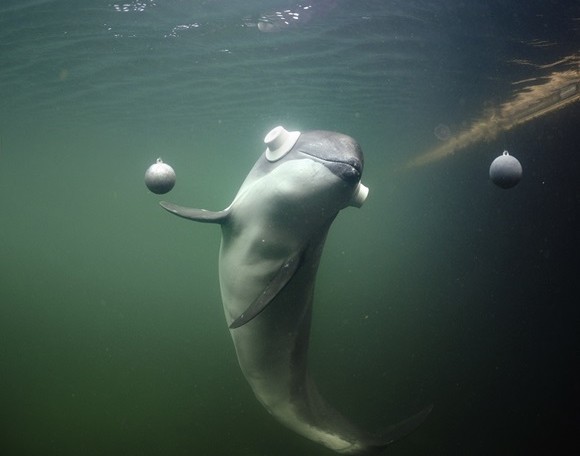
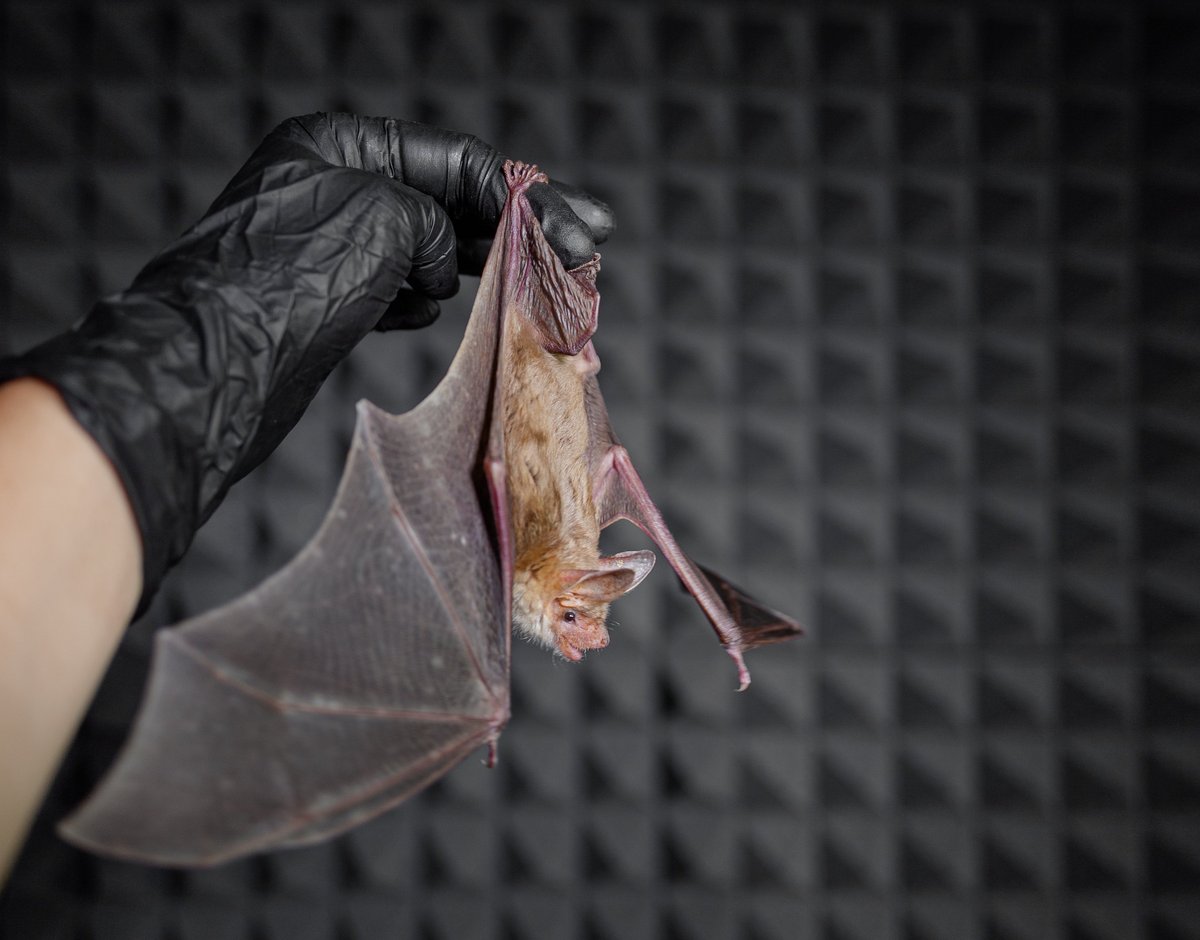
When studying echolocation in a captive setting, we ask the animal to repeat a desired task (target approach, prey capture etc.) many times in a row under controlled, but varying conditions. Rather than observing animals passively, we work with them actively, training individuals to perform specific behaviours on cue. To achieve this, we use operant conditioning, the fundamental building block of working with freely behaving animals in a captive setting.
Most animals are readily motivated by food, also known as the unconditioned stimulus. When we wish the animal to perform a task where correct behaviour cannot be rewarded immediately, we use a bridge stimulus, which could be a click or a whistle that the animal learns to associate with the food reward through repetition. This conditioned stimulus can then be used to shape and reinforce the desired behaviour but under controlled conditions.
We never punish animals and rely exclusively on positive reinforcement throughout all training and experiments. Regardless of performance during a session, all animals always receive their full daily food requirements. The wellbeing of our animals is not just an ethical commitment, it is also a scientific one, as calm and motivated animals produce the most reliable and reproducible data.