Laboratory studies are fundamental in teaching us about how animals operate their sensory systems under controlled conditions, but they tell us preciously little about how their sensory systems are operated in the wild, and how sensory flow informs behaviour under conditions of ecological validity.
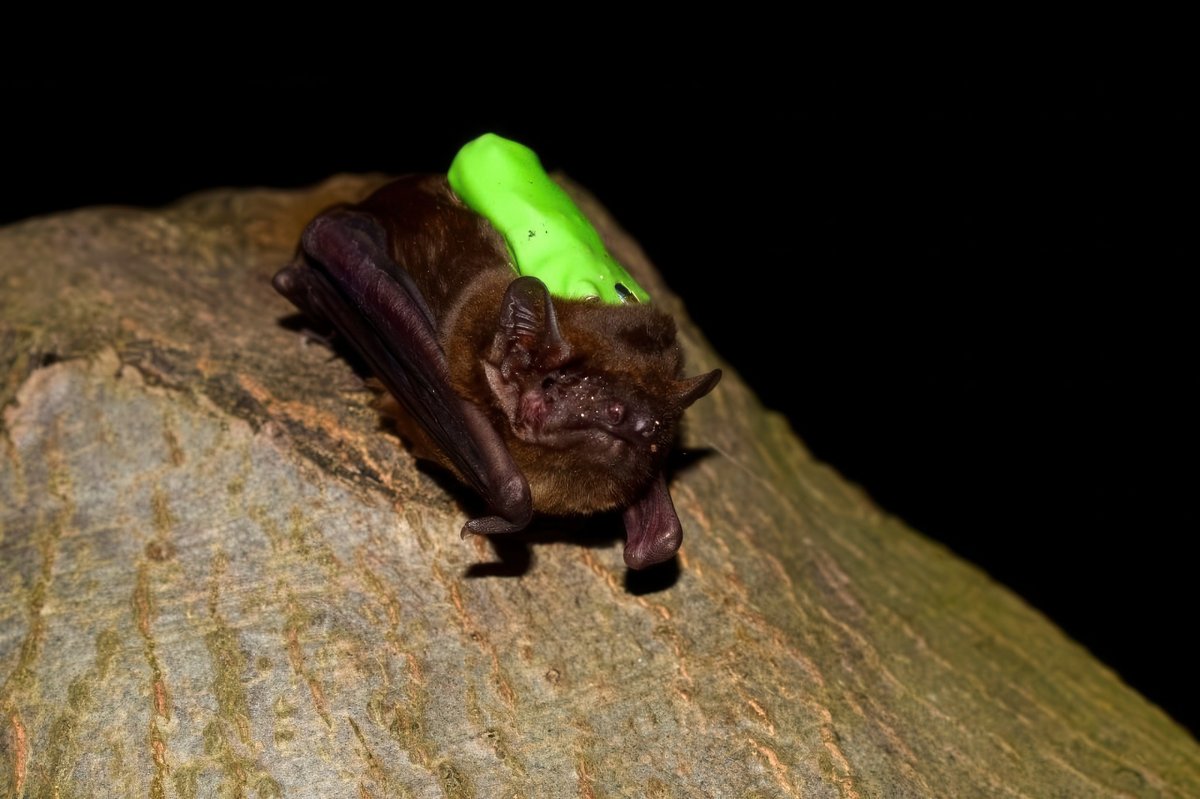
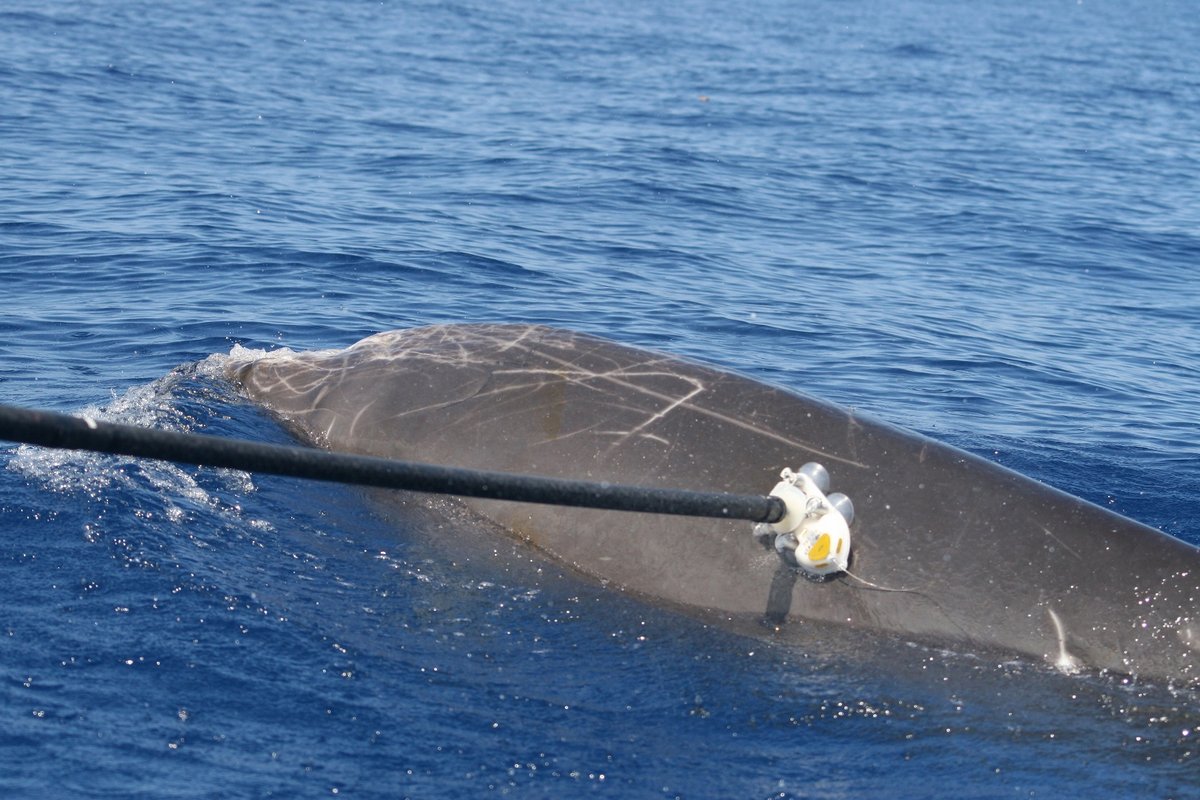
To study echolocation behaviour at the individual level, we use tags — small recording devices temporarily attached to an animal, often using suction cups for whales or kids glue for bats. Because tags are attached behind the forward-directed biosonar beam, the recorded signals suffer from distortion. Tag recordings are therefore not optimal for quantification of on-axis source parameters, but tagging is a very powerful method for capturing nearly every biosonar signal emitted by a tagged animal and in many cases also echoes returning from prey.
A major advantage of tagging is that echolocation behaviour can be linked directly to the tagged individual’s behaviour, as tags commonly include additional sensors that measure movement, heart rate, orientation, depth or height, and GPS location. Tags thus allow us to tap directly into the predator’s self-generated acoustic information streams in the context of actions taken during prey pursuit, allowing us to study the intricacies of predator-prey interactions and quantify foraging events and strategies in detail.