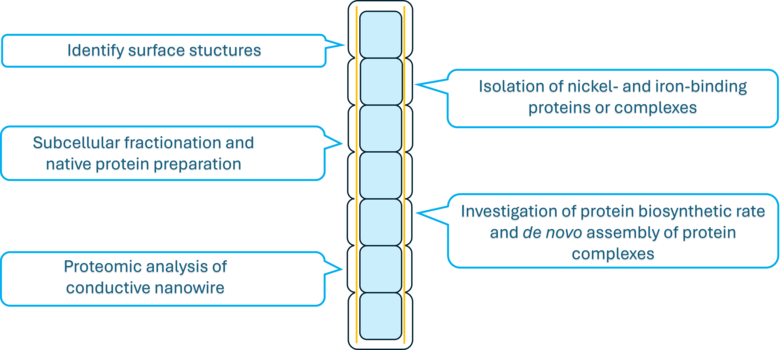
Cable bacteria contain highly conductive periplasmic fibers (PCF) and use them for intercel-lular long-distance electron transfer. Molecular principles of intercellular electron transport are still unclear; PCF are likely based on a protein backbone loaded with an unprecedented nickel-ligating cofactor. Published data indicate that the cofactor resembles synthetic nickel(II) bis-dithiolene polymers, but there is a lack of experimental atomic structure. Iden-tifying the highly effective nickel-based bioconductor and its interacting proteins is significant for understanding long-distance electron transfer and the division of labor in these multicel-lular prokaryotes. Revealing the PCF structure has potential applications for designing fiber polymers, conductive biomaterials, and biodegradable electronics.
The Marie Skłodowska-Curie Actions fund excellent research and innovation and equip researchers at all stages of their career with new knowledge and skills, through mobility across borders and exposure to different sectors and disciplines. The MSCA help build Europe’s capacity for research and innovation by investing in the long-term careers of excellent researchers.The MSCA also fund the development of excellent doctoral and postdoctoral training programmes and collaborative research projects worldwide. By doing so, they achieve a structuring impact on higher education institutions, research centres and non-academic organisations. The MSCA promote excellence and set standards for high-quality researcher education and training in line with the European Charter for Researchers and the Code of Conduct for the recruitment of researchers.

