
Extensive DNA survey of Denmark’s coasts reveals traces of 90 previously unrecorded species
Researchers at Aarhus University have found DNA from 90 marine species not previously recorded in Denmark. The study reveals how much remains hidden beneath the surface – and provides a new baseline for monitoring life along the country’s coasts.


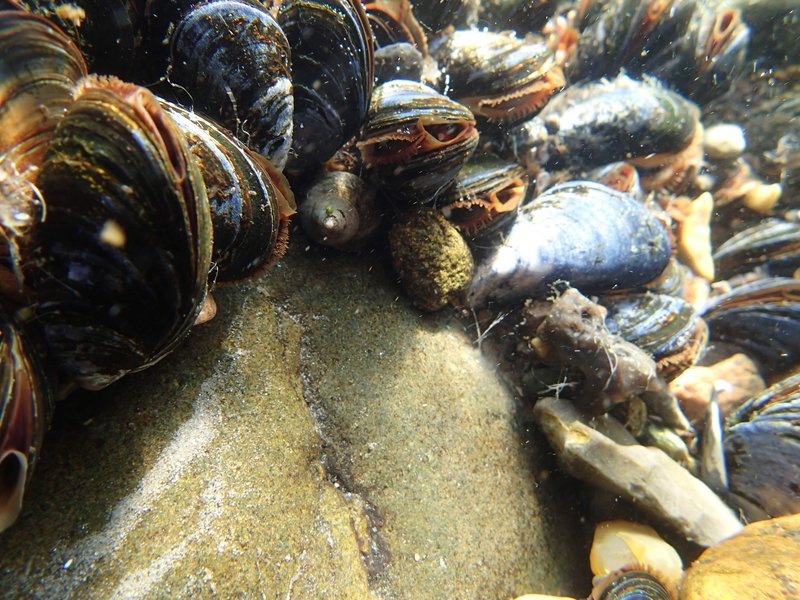
Denmark’s coastline stretches for 8,750 kilometres. Perhaps it is no surprise, then, that we have yet to get to know all our closest neighbours living beneath the water’s surface.
Researchers at Aarhus University, together with colleagues from Denmark and abroad, have now made a major effort to close that gap.
They analysed nearly 1,000 samples of seawater and seabed sediment, from the North Sea in the west to the Baltic Sea near the island of Bornholm in the east. They searched for genetic traces of organisms in the environment – known as environmental DNA, or eDNA. By comparing these traces with known DNA sequences, they could investigate which organisms occur in an area.
While most coastal studies and monitoring programmes focus on selected groups of organisms, the researchers chose to look across the entire tree of life – from microbes to porpoises.
They found DNA from almost 500 marine species, representing virtually all the major evolutionary lineages found among Denmark’s marine species. Of these, 90 had not previously been recorded in the country. The new findings include traces of crustaceans, marine bristle worms, sponges and various algae.
“The study shows how much there is still to discover about our marine life just beneath the surface, even along the coasts,” says Professor Philip Francis Thomsen of the Department of Biology at Aarhus University.
Among the previously unrecorded species are two marine bristle worms detected along the west coast of Jutland. Both are known from neighbouring countries, so the findings are consistent with their wider distribution.
DNA traces do not provide conclusive proof that the organisms they come from are physically present in the area where a sample was collected.
The researchers stress that physical specimens should be found before the species’ presence in Denmark can be definitively confirmed. This could, for example, be done through a citizen science project – and the study can help show where to look.
Salt and stone shape life
The study encompassed bacteria, algae and animals. Across these very different groups, salinity was the most important of the environmental factors investigated in explaining which organisms the researchers found.
Stone breakwaters generally harboured more species than sandy seabeds and eelgrass meadows. However, the different habitats and marine areas also supported their own distinctive communities of organisms. Protecting marine life therefore requires attention to more than just the places with the highest numbers of species.
Philip Francis Thomsen emphasises that, at a time when the marine environment is under pressure, the study provides an important baseline for tracking future changes in coastal biodiversity. It also shows how environmental DNA can broaden biodiversity monitoring to include more of the organisms living in our seas.
Additional information | |
| We strive to ensure that all our articles live up to the Danish universities' principles for good research communication (scroll down to find the English version on the website). The article is therefore supplemented with the following information: | |
| Funding | Velux Foundations, Carlsberg Foundation, Independent Research Fund Denmark |
| Collaborators | National Institute of Aquatic Resources at the Technical University of Denmark; The Ocean Institute, Copenhagen; Norwegian College of Fishery Science at UiT – The Arctic University of Norway; Center for Advanced Studies of Blanes, Spain; Department of Evolutionary Biology, Ecology and Environmental Sciences at the University of Barcelona; Department of Biological Sciences at the University of Bergen; and the Natural History Museum of Denmark at the University of Copenhagen. |
| Read more | The scientific article in Proceedings of the Royal Society B: Consistent drivers of coastal biodiversity across the tree of life. |
| Contact | Professor Philip Francis Thomsen Department of Biology Aarhus University pfthomsen@bio.au.dk +45 2714 2046 |