
New funding for CIFAR projects
CIFAR has received funding for several new research projects in and around Greenland.




New funding to Fleur Roijakkers & Andreas Dideriksen from Aage V Jensen Foundations (365.436 DKK).
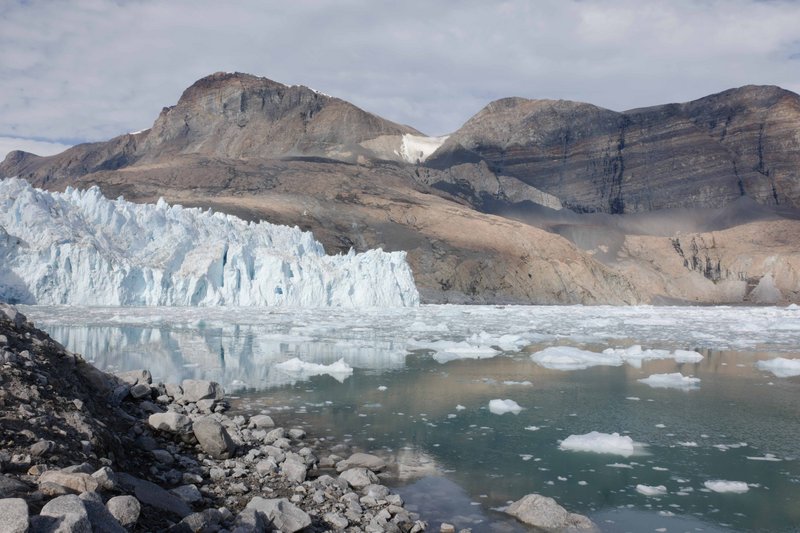
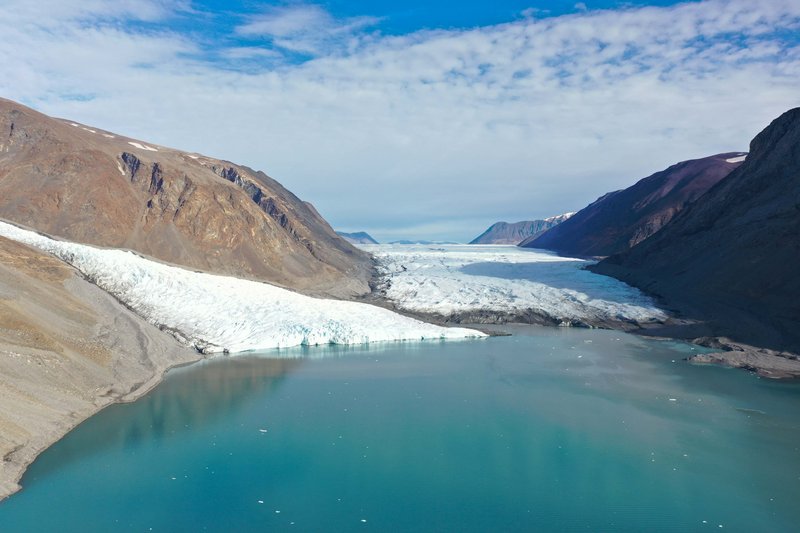
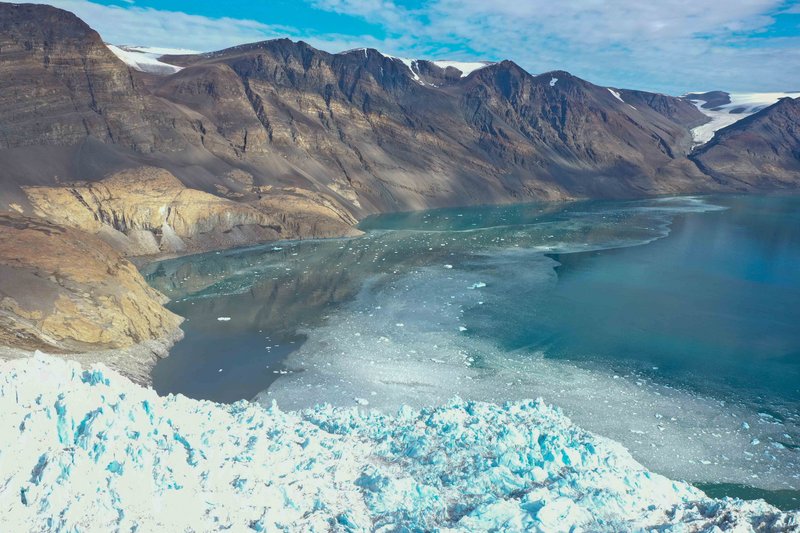
The Greenland ice sheet is melting rapidly, especially at marine-terminating glacier fronts, but the processes driving this melt and the fate of the resulting freshwater are not well understood. Meltwater released at depth forms buoyant plumes that mix with fjord waters, influencing glacier melt, fjord circulation, and potentially larger-scale ocean circulation such as the AMOC. This project uses drones equipped with thermal cameras to locate meltwater outlets, track plume mixing, map glacier changes, and estimate freshwater outflow. These observations will improve understanding of how glacier-derived freshwater affects fjord and ocean circulation. Field deployments are planned for marine-terminating glaciers in South Greenland, followed by Northeast Greenland.
New funding to Søren Rysgaard from Aage V Jensen Foundations (964.320 DKK).
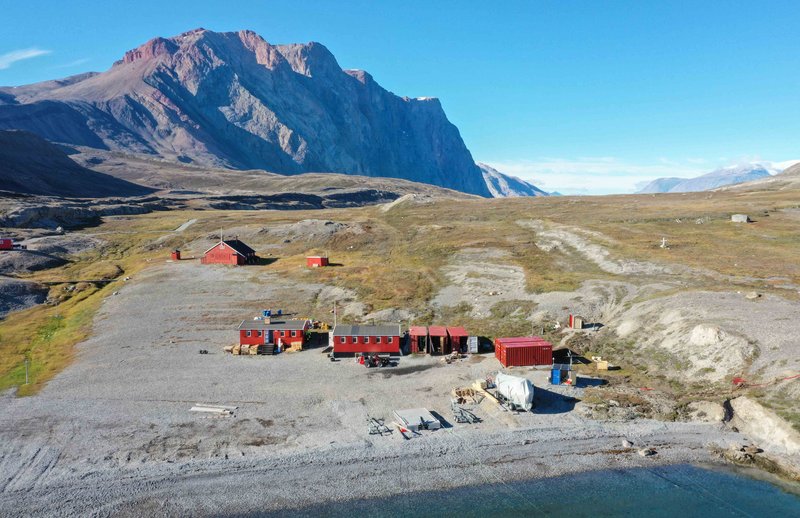
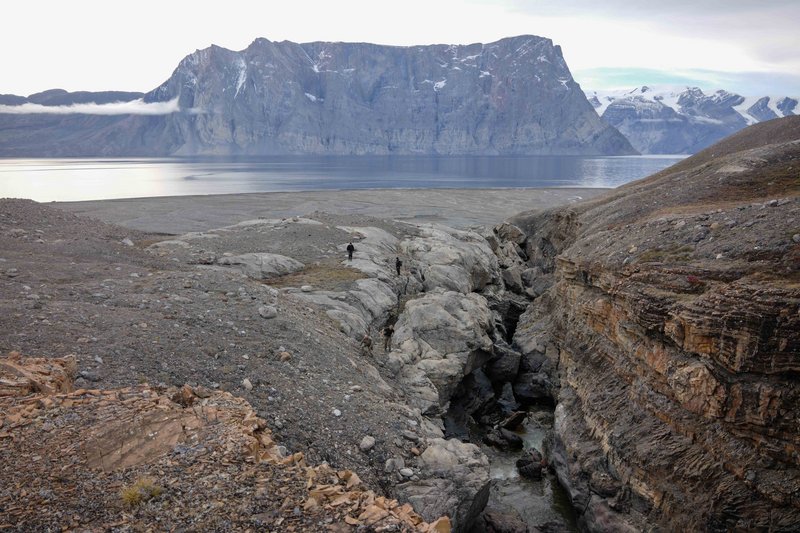
Tracing Greenland’s Freshwater: Year-Round Fjord–Shelf Interactions at the Arctic-Atlantic Boundary. The primary goal of this project is to address critical knowledge gaps in the seasonal dynamics of ocean–ice interactions within the Kong Oscar Fjord system in East Greenland, with particular emphasis on the processes occurring at the continental shelf–fjord gateway. Research questions: What is the year-round freshwater discharge from rivers and glaciers in East Greenland? How does this freshwater mix within fjords, and to what extent can it be detected at the coast?
New funding to Nanna Karlson & Søren Rysgaard from Carlsberg Semper Ardens Accomplish (12.800.000 DKK).
The REGLA project investigates how Greenland’s glaciers respond to increasing surface melt as the climate warms, a key uncertainty in predicting future sea-level rise. While some glaciers speed up with increased melt, others are self-regulating and slow down. REGLA aims to understand the mechanisms behind this contrasting behavior using seismic measurements, drones, remote sensing, machine learning, and glacier models. The project seeks to improve predictions of how Greenland’s glaciers will evolve under future climate change.
New funding to Nanna Karlson & Søren Rysgaard from Novo Nordic Foundation (2.830.449 DKK).
This project will develop a UAV-based measurement system to collect novel observations of sediment and nutrient outflow from Greenland’s glaciers. The resulting first-of-its-kind dataset will greatly expand observations and improve understanding of how marine-terminating glaciers influence marine ecosystems. These insights will support predictions of future change and inform sustainable management of Greenlandic and North Atlantic fisheries, which are vital to Arctic livelihoods.
New funding to Dorthe Søgaard & Søren Rysgaard from Aage V Jensen Foundations (474.840 DKK).
The purpose of this study is to use the TARA Polaris campaign in the Arctic Ocean to understand the composition of this ocean’s surface layer, its nutrients, freshwater sources, and biological activity, as it develops and transforms during transit across the entire Arctic Ocean. Tara provides the rare opportunity to observe how these surface waters evolve before they exit through the Fram Strait and flow along the East Greenland coast. By identifying how nutrients are consumed and how freshwater accumulates in the Arctic Ocean, we can determine the chemical and biological signatures of the water masses that eventually flow south along as the East Greenland Current. This creates a direct link between processes in the central Arctic Ocean and the environmental conditions shaping the fjords and coastal ecosystems in East Greenland.
New funding to Eugenio Ruiz Castillo & Søren Rysgaard from Aage V Jensen Foundations (2.125.010 DKK).
The hydrography of the Northeast Greenland Shelf significantly influences the global climate by affecting ocean stratification and thermohaline circulation. Observations show the shelf has freshened over recent decades, but research is limited due to ice cover, harsh weather, and the inability of remote sensing to study subsurface waters. Most knowledge comes from brief, ice-free period measurements, leaving seasonal hydrographic changes and biogeochemistry poorly understood. To address this, a year-round mooring equipped with physical and biogeochemical sensors will be deployed to study seasonal variability, long-term freshening, and the factors controlling biogeochemical processes.
New funding to Søren Rysgaard, Simon Bahrndorff & Josephine Nymand from Aage V Jensen Foundations (13.896.143 DKK).
The project “From Catchment to Coast” investigates how climate change impacts Arctic ecosystems by examining the links between marine and terrestrial environments along a natural environmental gradient from South to North Greenland (will expand GIOS observations and infrastructure in South Greenland). Arctic ecosystems are highly sensitive to temperature changes, yet current understanding is limited because studies typically focus on single environments or locations, making it difficult to predict ecosystem responses across the region. This project will measure key climate and biogeochemical parameters continuously using automated weather stations, marine moorings, eDNA, and other novel monitoring methods across multiple sites, allowing researchers to capture interactions between land and sea under changing conditions. The project includes establishing a Ph.D. research school expanding a southern research platform in Narsarsuaq into a fully operational station, and building research capacity in Greenland. By integrating data across the thermal gradient, the project aims to provide insights into how climate change will affect Arctic ecosystems, inform local communities’ decisions on hunting, fishing, and agriculture, and contribute to global understanding of climate impacts in polar regions.