
Tara Polar Station
What happens in the high Arctic impacts the entire planet, making the Arctic Ocean a true sentinel of global change.
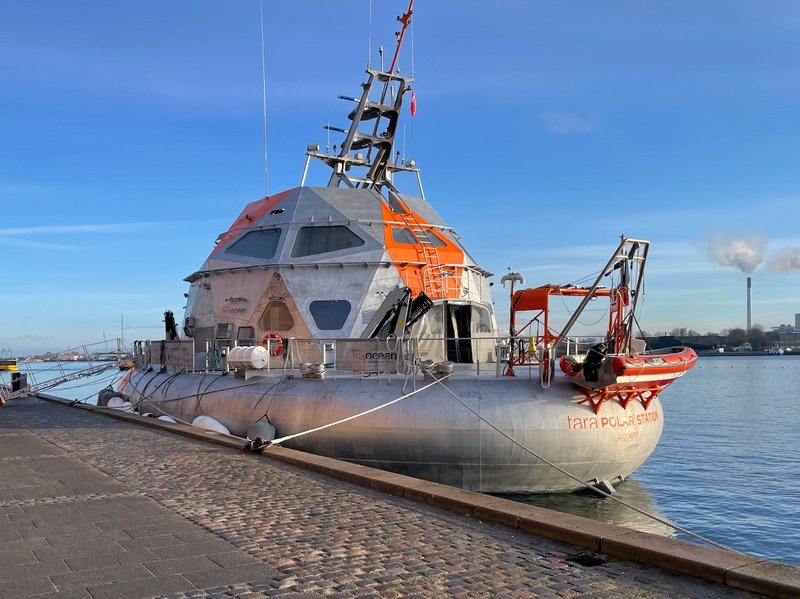
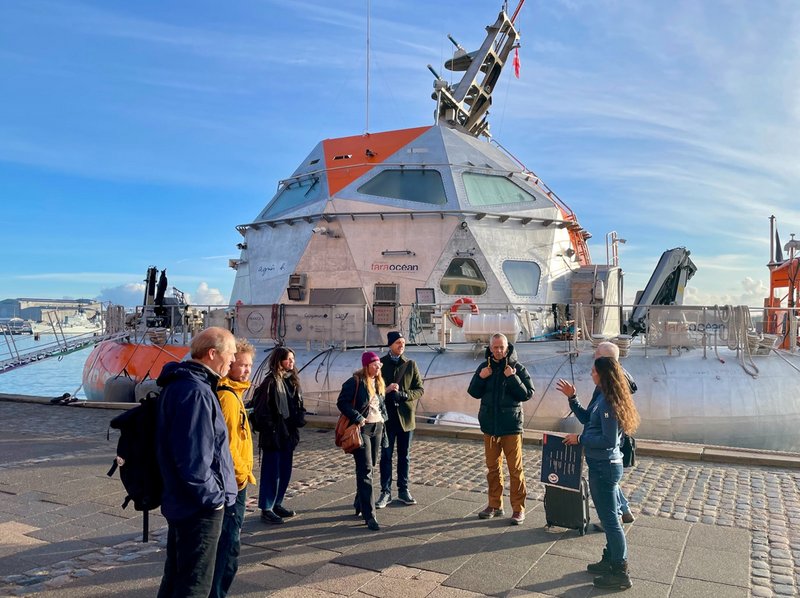
To understand this annually frozen-over ocean and its fluctuations, given the speed of change in recent decades, the deployment of long-term observational studies throughout the seasons and over future decades is needed.
To respond to this need, Tara started in 2003 the construction of a new platform, Tara Polar Station, which was completed in April 2025 by Constructions Mecaniques of Normandy in Cherbourg, France. Tara Polar Station is designed to drift with the ice pack and withstand extreme polar conditions with up to 500 days of autonomy. It will support scientific research and observations in the central Arctic over a series of 18-month expeditions. To promote international cooperation and foster the best available research, scientists from many countries will engage in multiple successive drifts until 2045.
Tara Polar Station realized a test drift this summer when it navigated from Svalbard to Eastern Greenland and got trapped in the ice for the first time. After scales in Iceland, Norway and Denmark, it will spend the winter season in Oulu, Finland, for more tests in the ice.
The first expedition, Tara Polaris I, is scheduled to begin in September 2026 at 80°N. Given the expertise developed by its collaborating laboratories over the past 15 years on genome-resolved studies of the oceans, the Tara Ocean Foundation will deploy a science program with biology at its core, while also integrating key physico-chemical measurements from the ocean, through the ice and surface snow layers, and upwards, towards the atmosphere. The scientific program will include both an 'observatory' component over multiple drifts as well as a ‘laboratory’ capacity to perform experiments onboard in real time. For the first time, the central Arctic Ocean and the biodiversity it supports will be studied over the long term, with observations possible through all seasons.
The consortium brings together 12 scientific institutions from 30 different countries, involving 100 scientists, including CIFAR scientists from Aarhus University.