
Porpoises are masked by high frequency vessel noise
Vessels at sea produce loud broadband noise with documented negative impact on both behaviour and hearing in baleen whales with good low frequency hearing. However, vessels also produce high frequency noise above 100 kHz where porpoises echolocate and communicate, and it is not known if such exposures have hearing effects on these small toothed whales frequently exposed to vessel noise in inner Danish waters

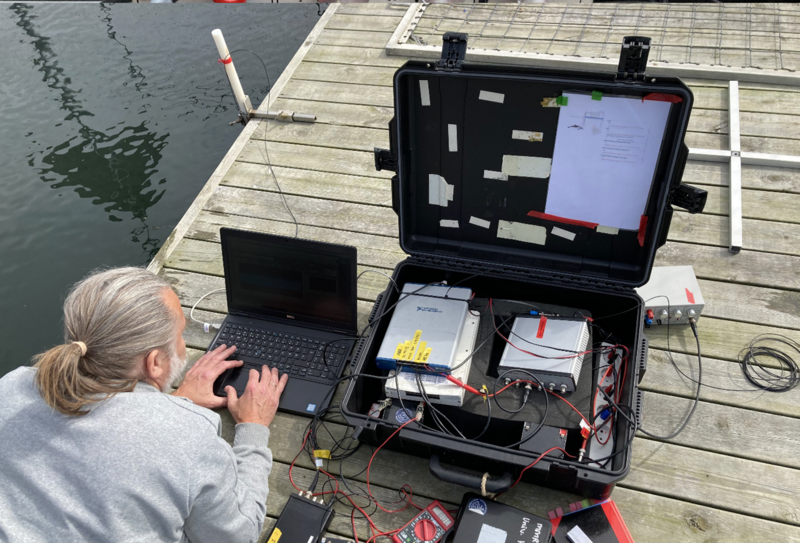
This lack of data prompted Beedholm et al. in a recent JASA paper to test if levels of typical vessel noise exposures cause masking and hearing effects in a trained harbour porpoise at the Fjord and Belt center.
Measuring the animals’ hearing with a non-invasive auditory evoked potentials technique, Beedholm et al. employed a very fast stimulus paradigm to gauge changes in hearing sensitivity in the animal during and right after noise exposure had ended. The results show that the animals’ hearing will be masked by noise from vessels close by, but also that boats will only rarely be loud and close enough to cause temporary shifts in hearing sensitivity. Thus, even though porpoises are high frequency hearing specialists, their ability to echolocate fish and fishing nets and to communicate is compromised within several hundred meters of passing large cargo ships and fast recreational vessels.
The article can be found here: https://doi.org/10.1121/10.0041757