
Chester Sands: Evolution and diversity of Southern Ocean brittle stars
Seminar: Akvatisk biologi
Oplysninger om arrangementet
Tidspunkt
Sted
Institut for Biologi, Ole Worms Alle 1, bygning 1135-234
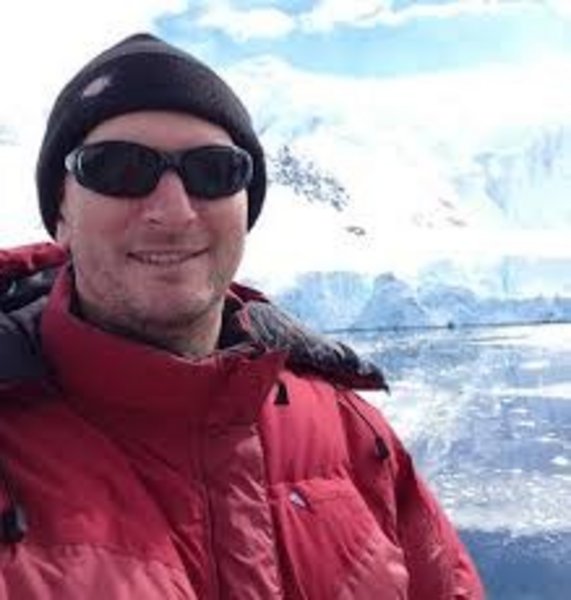
Chester Sands from the British Antarctic Survey will be visiting Aarhus University in June and will give a seminar on the evolution and diversity of Southern Ocean brittle stars in the seminar room in 1135-234
Cheps originates from Tasmania, Australia but found himself working for the British Antarctic Survey as a molecular ecologist by mistake 20 years ago. Making the best of it, he has had more than 25 polar cruises and some nice warm ones too, mostly sampling the sea floor for animals and columns of mud. He has worked on British, US, German, Russian, French and Greenlandic ships, and is basically happy to work with anyone who can tolerate him and provide sampling opportunities. His main interests are the origins and structure of diversity, resilience of assemblages and the management of ecosystem services.
Cheps will be at AU between the 15th and 20th of June and happy to chat to anyone who is interested.
Abstract: The Southern Ocean (SO) is one of the most diverse marine regions. Biogeographic models present an assemblage of large well-connected populations. The processes underlying the diversity are thought to be historical vicariance, with in situ adaptation to cooling conditions, and pulses of diversification over the 100K year glacial cycles of the late Pleistocene. Brittle stars are a diverse and abundant macrofaunal group found on the SO sea floor, among which are differing life history, reproductive and feeding strategies, making them an excellent study system. I find diversity among brittle stars is underestimated with strong biogeographic structure. The most recent diversification of each group studied corresponds to a specific period – the Mid Pleistocene Transition – predating the 100K year glacial cycles of the Late Pleistocene. If the biogeographic patterns observed occurred due to a shared event, it can be extrapolated across all groups, allowing a biogeographic approach to conservation management.
________________________________________________________________________________
Microsoft Teams meeting
Join: https://teams.microsoft.com/meet/35429664315240?p=wP84yH6Fs6R5aRMkQp
Meeting ID: 354 296 643 152 40
Passcode: Bg7P3RP3
Dial in by phone
+45 32 73 55 36,,339418710# Denmark, All locations
Phone conference ID: 339 418 710#
Join on a video conferencing device
Tenant key: aarhusuni@m.webex.com
Video ID: 128 394 783 7